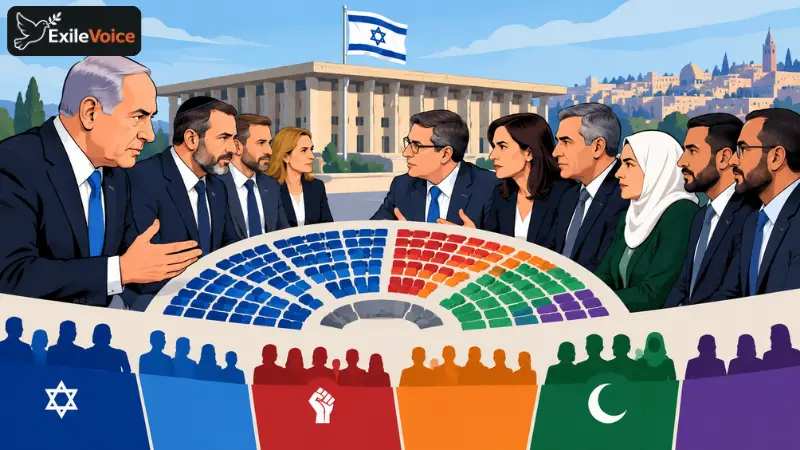
The recent parliamentary elections in Israel have resulted in a significant political upheaval, creating a complex landscape for future governance and coalition formation. With the 120 seats in the Knesset up for contention, political parties have entered a critical phase of negotiation to secure the necessary threshold of 61 seats required to form a governing majority.
Preliminary results indicate a tightly contested race among traditional political blocs, with Prime Minister Benjamin Netanyahu's alliance securing a substantial share of seats but falling short of an outright majority. Meanwhile, opposition factions have consolidated significant support, positioning themselves as viable alternatives for government formation. A notable development in this electoral cycle is the surge in representation for Arab parties, which captured a historic number of seats. This strong electoral turnout and increased parliamentary presence have elevated these parties into potential kingmakers, complicating traditional alliance structures and forcing major political factions to rethink their strategies.
As political leaders explore various coalition scenarios, ranging from traditional right-wing alliances to cross-block partnerships, the future direction of Israeli policy remains uncertain. The inclusion or exclusion of Arab parties in upcoming coalition talks will likely shape the country's legislative agenda, diplomatic posture, and domestic social cohesion for the foreseeable future.