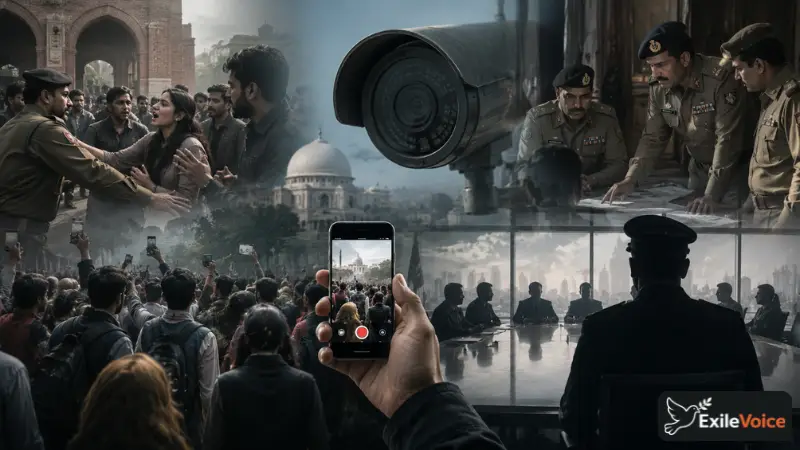
Recent incidents involving institutional personnel and civil society members have underscored deep-seated tensions between state authorities and the general public. Incidents on university campuses, which initially drew polarized narratives regarding harassment and public conduct, have been re-evaluated as extensive video documentation emerged from independent sources. These visual records have challenged preliminary official accounts, illustrating how digital media platforms empower citizens to capture and disseminate real-time evidence, thereby altering public understanding of controversial events.
The proliferation of independent digital reporting has transformed accountability mechanisms, making it increasingly difficult to sustain unverified official narratives. While traditional media outlets often project selective perspectives, user-generated content provides alternative viewpoints on law enforcement actions, domestic disputes, and institutional behavior. This shift highlights a growing dissonance between institutional authority and public scrutiny, as citizens demand greater transparency and adherence to due process in cases involving domestic violence, security personnel overreach, and administrative accountability.
Moreover, structural criticisms regarding the assignment of military personnel to key bureaucratic positions without standard competitive examinations have renewed debates on governance reform. Analysts point out that selective placement in high-influence administrative and diplomatic roles bypasses conventional merit systems, raising questions about institutional balance and civilian oversight.