

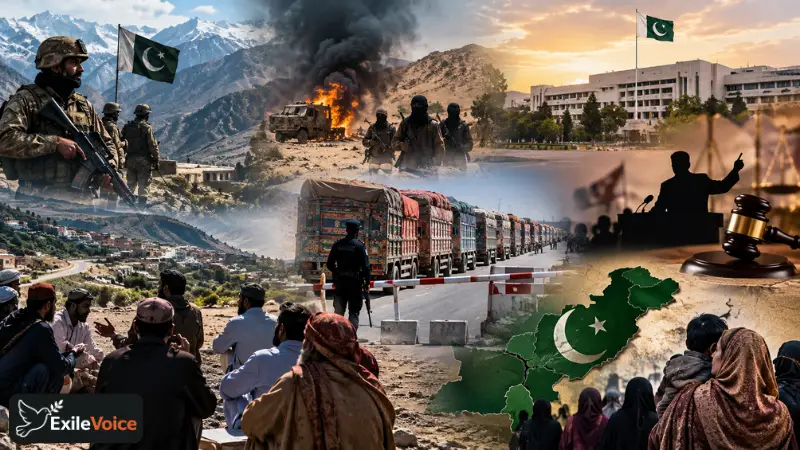
Recent reports from various administrative regions within Pakistan highlight compounding domestic security challenges, governance pressures, and complex political dynamics. Observers on the ground have documented severe security incidents in Azad Kashmir and Balochistan, raising urgent questions regarding regional stability and civil-military relations. Local committees and community representatives have expressed profound apprehension regarding deteriorating security conditions and the socioeconomic impact of ongoing administrative interventions.
In Balochistan, reports of confrontations involving security infrastructure and armed opposition groups underscore persistent internal security vulnerabilities. Meanwhile, administrative friction along provincial borders, including restrictions on essential commodity transit and movement between Punjab and neighboring regions, continues to strain local populations and exacerbate economic hardships. Analysts note that these logistical bottlenecks, combined with contentious local political restructuring and administrative changes, contribute to widespread public dissatisfaction.
Furthermore, political observers emphasize that ongoing legal and administrative maneuvers aimed at political opposition groups are designed to create strategic distractions from core governance failures. The systematic disruption of local governance structures and political organizing highlights an urgent need for transparent institutional reforms, safeguarding fundamental civic rights, and restoring economic normalcy for citizens across all administrative tiers.