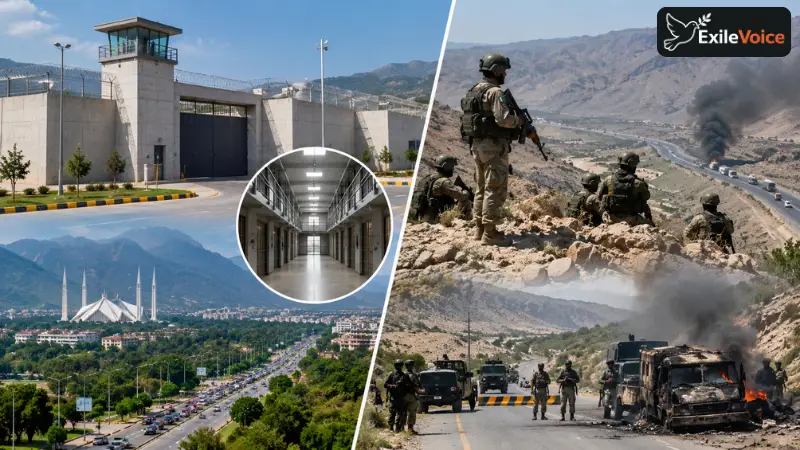
The administrative landscape in Pakistan's capital, Islamabad, has reached a significant milestone following official announcements regarding the long-delayed Islamabad Model Prison project. Originally conceived to alleviate structural overheads and logistics pressure on the regional correctional framework, the modern facility in Sector H-16 is now set for inauguration. Federal officials confirmed that the first phase of the prison will accommodate up to 1,500 inmates currently held at Adiala Jail in Rawalpindi whose cases are being tried under Islamabad's jurisdiction. This infrastructure shift aims to streamline custody logistics, improve court appearance scheduling, and modernize prisoner housing facilities in line with updated correctional protocols.
Simultaneously, the broader administrative and law enforcement apparatus continues to face persistent regional security pressures, particularly in the province of Balochistan. Armed insurgent groups and separatist organizations have carried out targeted strikes on security checkpoints, vital transport corridors, and local infrastructure, severely disrupting daily movement across major highways such as the Karachi-Quetta route. Security forces have responded with heightened intelligence-based operations and intelligence-guided clearance drives across key districts, resulting in severe exchanges of fire and notable insurgent casualties.
These developments highlight a complex balance between internal security challenges and urban administrative expansion. As law enforcement agencies work to manage regional insurgencies and safeguard key infrastructure in volatile corridors, urban management authorities in the federal capital are focusing on expanding local facilities to manage legal, judicial, and detention processes more efficiently.