
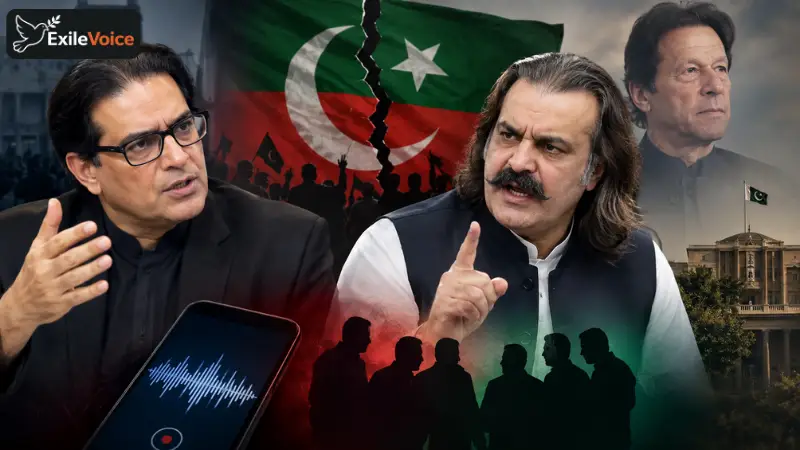
The political landscape within Pakistan Tehreek-e-Insaf (PTI) has faced severe internal friction, highlighted by recent public disclosures, statements, and leaked audio recordings involving senior party figures. The controversy ignited when prominent leader Salman Akram Raja issued a public statement addressing what he termed an attack by unconstitutional decision-makers on the internal unity of PTI. Raja disclosed concerns regarding a faction of provincial assembly members allegedly attempting to bypass the political committee and party leadership to select a new provincial president and chief ministerial candidate.
This statement drew swift and sharp backlash from key regional figures, most notably Khyber Pakhtunkhwa Chief Minister Ali Amin Gandapur. In his formal response, Gandapur criticized Raja's remarks as irresponsible and damaging to party cohesion during a critical political juncture. Gandapur challenged the assertions regarding unauthorized groupings within the provincial assembly, demanding concrete evidence and accountability for the claims made. Furthermore, an audio leak attributed to Gandapur circulated widely across digital and mainstream media channels, featuring sharp criticism directed at intra-party dynamics and past political associations.
The fallout extended across the provincial legislative ranks, with multiple members of the provincial assembly voicing support for Gandapur's position while questioning the timing and basis of Raja's assertions. Observers note that these public disputes expose deeper vulnerabilities within the party structure, particularly concerning decision-making authority, institutional continuity during leadership detentions, and alignment with the overarching directives of founding leader Imran Khan. As various factions debate accountability versus unity, the party navigates a complex environment marked by external pressures and internal disagreements over leadership succession.